
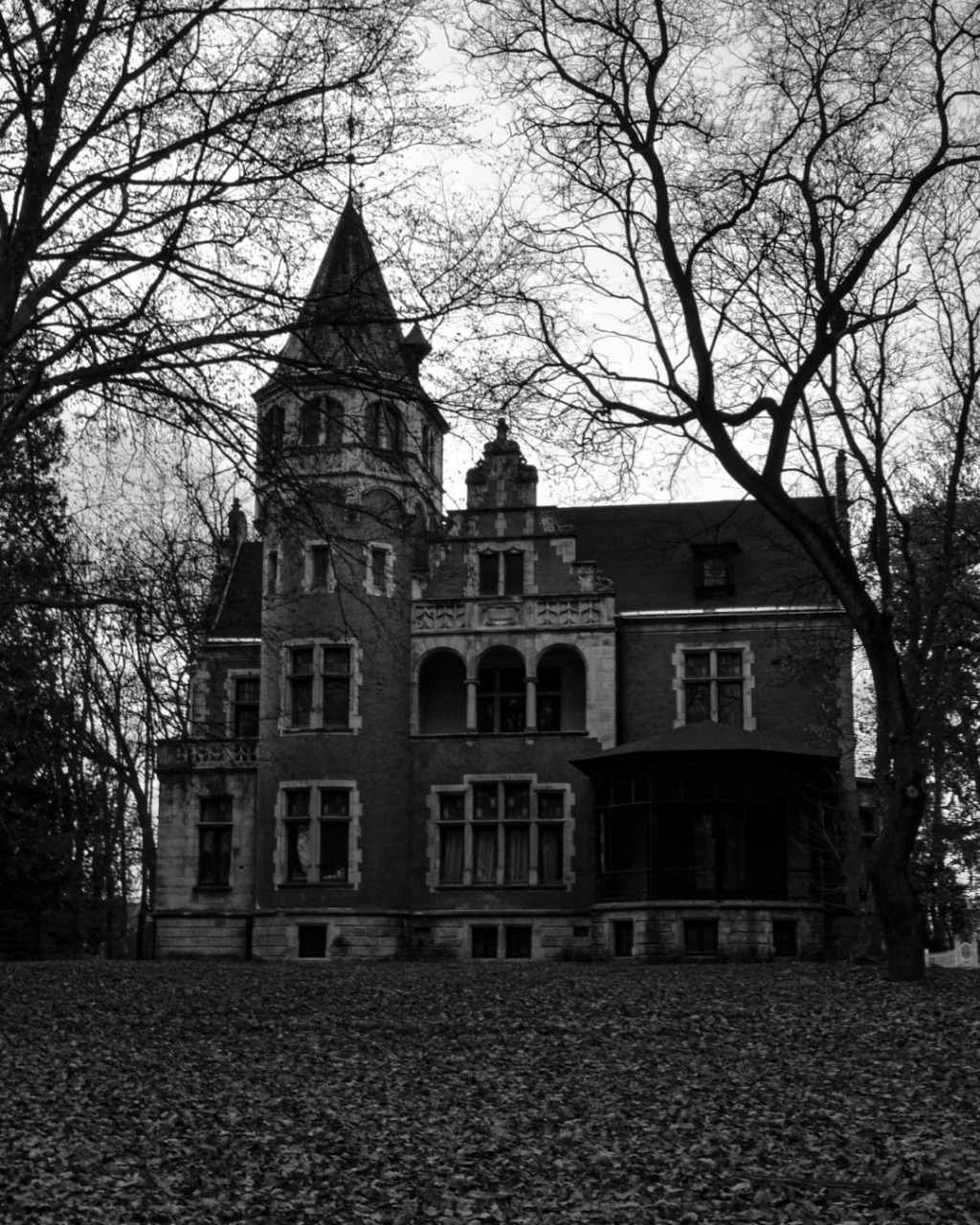
There is an old house somewhere along a Louisiana bayou that you have probably passed a hundred times. It has peeling paint and a garden that has long since become wild. Two rocking chairs sit on the porch, one tilted slightly to the side. The trees seem to close around it, their branches reaching over the roof like crooked fingers and the Spanish moss hanging from the oaks, shift slowly in the damp evening air. The porch that has begun to surrender to time, its boards silvered by years of rain and sun. The windows are cracked, and one of the shutters hangs from a single hinge.
It is the house no one wants to buy. The house children dare one another to approach. More importantly it is the house with a story no one can quite agree on. The details change but the house remains as a challenge to those who dare to question it.
Why are we so drawn to places we believe might frighten us? Why do we slow down when we pass an abandoned house? Why do we look through broken windows when we know we probably shouldn’t? Why do we find ourselves searching for photographs of old mansions, abandoned hotels, decaying plantations, and forgotten houses? Perhaps it is because we aren’t really afraid of the house, but of its possibilities. It happened to this family. What if it happens to us?
The House as a Character
Some houses in literature are so vividly written that it becomes almost impossible to separate the house from the story itself. They aren’t merely settings, but characters.
Consider the House of Usher in Edgar Allan Poe’s The Fall of the House of Usher. The house does not simply sit in the landscape while the story unfolds around it. Its decay seems intertwined with the decay of the Usher family itself. The cracks in the structure feel like cracks in the people who live inside it. The house becomes an outward expression of something already broken.
A house can remember without speaking. It can witness a marriage, a murder, a birth, a betrayal, a death—and remain standing long after everyone involved is gone. It holds photographs on mantels, fingerprints on windows, and names carved into doorframes.
It becomes a container for human stories and that is why an empty house can feel so full.
We Imagine What Happened There
Every town has a house everyone knows about. The house people point toward and say, That’s where it happened. But what happened?
Nobody seems entirely certain. The house is frightening precisely because we don’t know its complete history. Humans are remarkably uncomfortable with unfinished stories. Give us a photograph of strangers, and we invent their lives. Did someone disappear? Was there a child who never came home? The less we know, the more our imagination supplies, and what we imagine is often far worse than reality.
Shirley Jackson understood this beautifully in The Haunting of Hill House. The terror of the house is not simply in what can be seen. It is in uncertainty—in the possibility that something is happening just beyond our ability to understand it.
This is one of the oldest tricks of fear: Leave enough empty space for the imagination to fill it. We are often frightened less by what we know than by what we cannot know. The darkness underneath the bed is rarely as frightening once we turn on the light.
A hallway is less terrifying once we discover the sound was only a branch tapping against the window and the shadow disappears when we understand what created it. But before we know? Anything is possible and that is where fear lives.
The Psychology of the Unknown
The unknown is the sound of footsteps when you are certain you are alone. A door that is slightly open when you remember closing it or a floorboard creaking somewhere down the hallway. It is nothing you can prove, and that is what frightens us.
The unknown asks the imagination to participate, which is why Gothic literature so often gives us corridors, locked rooms, attics, basements, staircases, fog, mirrors, shadows, and doors. All of these are invitations to wonder.
In Rebecca, Manderley becomes frightening not because it is visibly monstrous, but because the house is saturated with the presence of someone who is no longer alive. The new Mrs. de Winter enters a world in which Rebecca seems to exist everywhere without actually being there. Her absence becomes a presence.
That is one of the most unsettling things a house can contain: someone who is no longer there. The mind cannot stand an empty page, so it writes.
Abandoned Houses and Nostalgia
But eventually, if we look at an abandoned house long enough, something strange happens. The fear begins to fade, and sadness takes its place.
Once upon a time, someone cooked dinner in that kitchen, sat at that table, and probably complained about the leaking roof. A family celebrated a birthday, wrapped presents beneath the Christmas tree, and kissed someone in the hallway and there were ordinary Tuesday nights when nothing remarkable happened at all.
We forget how quickly an ordinary life can become history. One day there are dishes in the cabinets, then there aren’t. We know what it is to find an old photograph and suddenly feel the weight of a time we cannot return to. We look at an abandoned house, we recognize something of ourselves: Our memories left behind beneath a layer of dust.
The Haunted House as a Metaphor
The best haunted houses aren’t really about ghosts. They’re about us. We are all, in some way, houses with rooms other people have lived in. We carry old memories in places no one else can see. We keep certain doors locked. There are photographs we don’t look at anymore. We have names that still make something inside us ache and sometimes we are haunted by people who never actually lived inside our homes at all. We are haunted by what they said or Or what they didn’t say. We are haunted by the stories other people invented about us because we didn’t tell them the truth. When we don’t reveal everything, people fill in the missing pieces. Once someone has created a version of you in their mind, it can become almost impossible to convince them otherwise. We do this to houses, too.
Maybe the House Isn’t Haunted
Perhaps our fascination with haunted houses has less to do with ghosts than we realize. We tell stories about them because stories give shape to things we cannot explain. We turn empty houses into haunted houses because it is easier to believe a ghost is responsible for the feeling we have inside them than to admit what the house actually makes us think about: Time. Death. Memory. Loneliness. Change.


Leave a comment